History
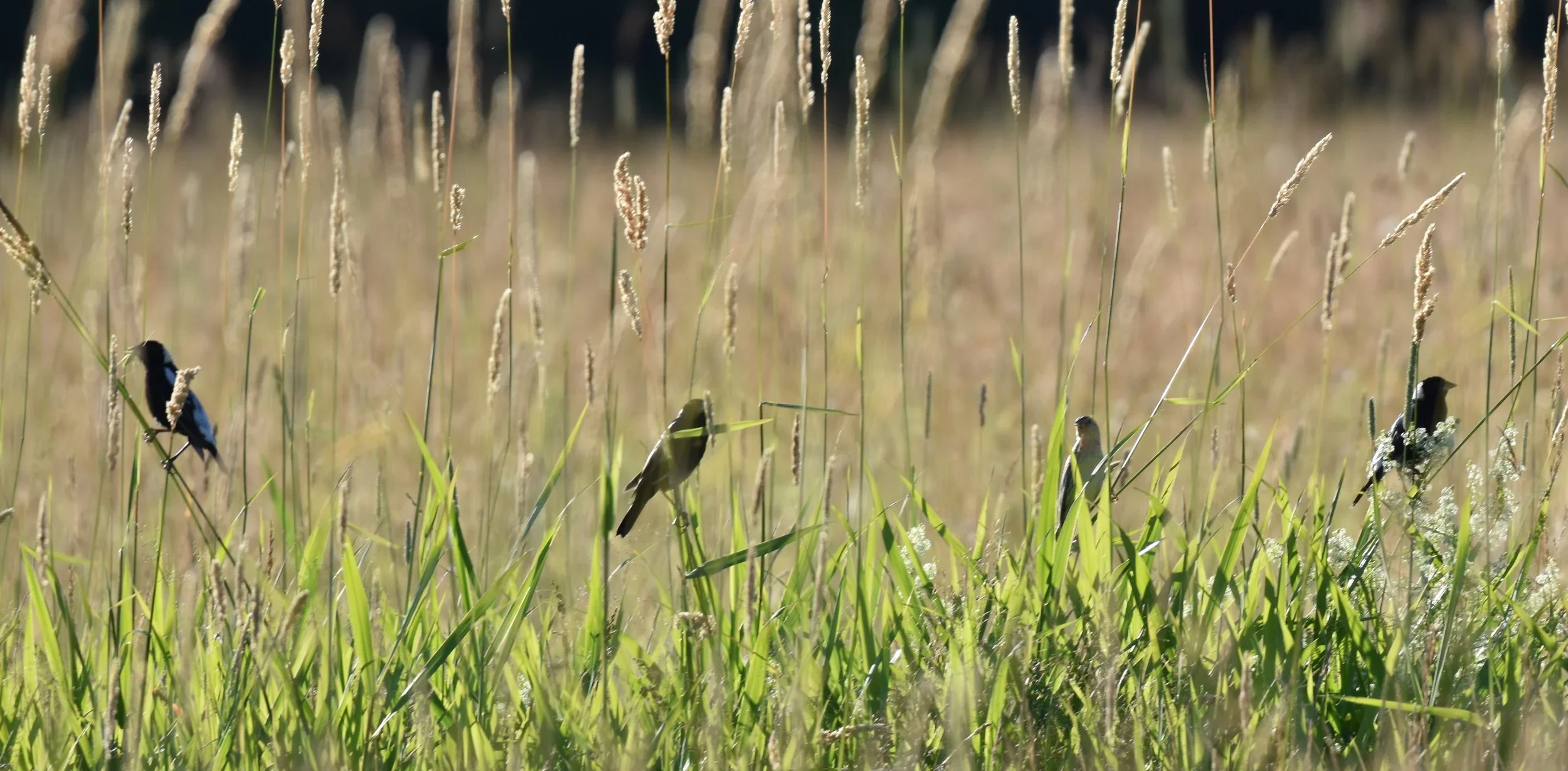
The Ag Allies program began in 2016, born from a moment Laura and her husband could never forget—seeing bobolinks lose their nests during a routine field mowing. Haunted by this devastation to the birds, Laura determined to find ways to help balance the needs of Maine’s grassland birds and the farmers who steward the land.
As a nutrient management planner with the Somerset County Soil and Water Conservation District, Laura already had relationships with many farmers in Somerset County. That first year, she worked one-on-one with a chosen few, walking their fields, listening to their challenges and concerns, and helping implement conservation practices that fit each farm’s needs. From there, word of the program spread quickly. What began as local outreach blossomed as farmers and landowners began reaching out on their own.
In 2018, after completing a grassland conservation project with the former Damariscotta River Association, The Cornell Lab invited Ag Allies to become a formal collaborative partner. Their support helped the program expand statewide and build strong relationships within Maine’s land trust community—providing a base that is critical to long-term grassland management.
As the program grew, the Maine Department of Inland Fisheries and Wildlife joined the effort, providing field biologists to assist with assessments and outreach during nesting season. Their partnership significantly expanded Ag Allies’ capacity to serve farmers, landowners, and land trusts across the state. The personalized, relationship-driven approach has become the heart of the Ag Allies model. Ag Allies uses a variety of tools to work with each farmer, and their team stays with the farmers throughout the nesting season—ready to troubleshoot, adjust, and support, whenever a need arises. This level of partnership is why Ag Allies works.
Now, as Ag Allies prepares for its 10th field season, we look back with deep gratitude. What began with a small grant, one unpaid, part-time staff member and a handful of farmers willing to delay harvest for the sake of a charismatic little bird has grown into a statewide conservation movement.
Today, more than 100 landowners—from nearly every corner of Maine—stand with us, proving that conservation and agriculture not only can coexist, but can strengthen one another.
And this story is still being written.
If you’re reading this, you have a role to play. Whether you’re a farmer, a landowner, a conservation partner, or simply someone who believes in protecting what makes Maine special—there is a place for you in this work.